

Assoc. Prof. Neil Patrick Del Gallego
De La Salle University, Philippines
Dr. Neil Patrick Del Gallego is an
Associate Professor and Chair of the Department of Software
Technology, College of Computer Studies, De La Salle University
(DLSU), and heads the Graphics, Animation, Multimedia, and
Entertainment (GAME) Lab. He earned his MS and PhD from DLSU and
was recognized with the Gold Medal for Outstanding Thesis, the
Outstanding Dissertation Award (DLSU–CCS), and a 2024 Special
Citation from the National Academy of Science and Technology
(NAST), Talent Search for Young Scientists. Before joining DLSU,
he gained five years of industry experience in Philippine game
development at Anino Games Inc. and Playlab Inc., and he
pioneered a game engine construction course with a peer-reviewed
publication in Elsevier Entertainment Computing. He is currently
leading Project Anito, a government-funded initiative, advancing
in-house game engine development for game studios, and
AI-assisted virtual worlds creation in the Philippines.
Speech title: "Game Development Meets Computer Vision: From Developing In-House Game Engines to Virtual Worlds Creation for Various Computer Vision Tasks"
Abstract: Game development and computer vision models trained using synthetic data share the same challenge of needing high-fidelity, editable 3D worlds, quick enough to render in real-time, or fast enough to produce vast amounts of synthetic visual data. This study presents two major initiatives that connect in-house game engine and tool construction for game development workflows, and connecting these for computer-vision-driven virtual world creation. Project Anito is a PH government initiative for in-house game engine development, emphasizing specialized tools for real-time rendering and rethinking of 3D asset/workflow production. The discussion highlights how the Anito ecosystem supports practical creator pipelines, positioning it as a “creative platform” for graphics innovation. In parallel, another PH-based research project applies game development techniques to enable virtual world synthesis for computer vision (CV) tasks, enabling controllable environments where scenes, viewpoints, and ground-truth information can be generated systematically for training various CV models. Together, these efforts demonstrate an end-to-end approach: building creative engine tools that can directly power CV-ready worlds, bridging technical capacity in game engine development with the needs of modern computer vision research.

Dr. Mahdi Taheri
Brandenburg Technical University, Germany
Mahdi Taheri received his B.Sc.
degree in Electrical Engineering in 2017 and his M.Sc. degree in
Electrical Engineering in 2021. He obtained his Ph.D. in
Computer Systems from Tallinn University of Technology
(TalTech), Estonia, in January 2025. During his doctoral
studies, he gained industry-oriented research experience
through a six-month internship at IHP – Leibniz Institute for
High Performance Microelectronics, Germany. Since January 2025,
he has been working as a researcher at Brandenburg University
of Technology (BTU) Cottbus-Senftenberg, Germany, while
continuing as a part-time researcher at TalTech. He joined
Humboldt University of Berlin as a permanent researcher in
September 2026 and leads his Reliable and Secure Systems (RSS)
team, with research focused on reliable and secure AI systems,
neuromorphic computing, approximate computing, and hardware
accelerators.
Speech title: "Reliability vs. Security: Friends or Foes?"
Abstract: As Deep Neural Networks are deployed in safety-critical and resource-constrained edge AI systems, ensuring both reliability and security becomes essential - and increasingly complex. This talk will explore the interplay between hardware efficiency, reliability, and security in edge AI, covering state-of-the-art resilience assessment methodologies, cross-dependencies between reliability and security vulnerabilities, and hardware-aware lightweight mitigation techniques for edge platforms.
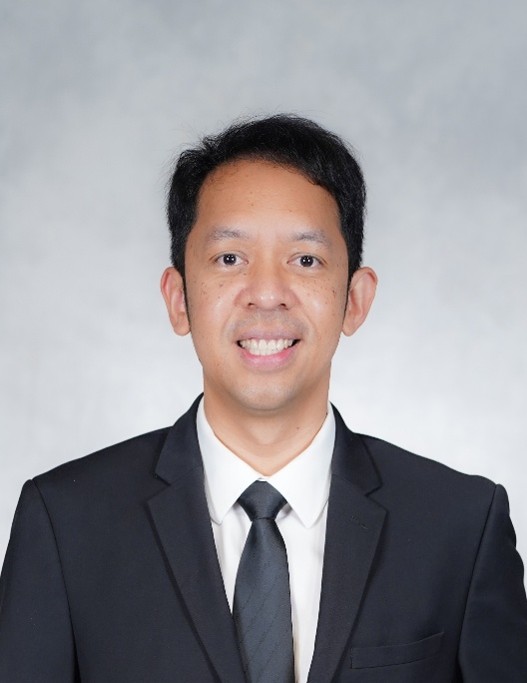
Dr. Surasak Phetmanee
Thammasat University, Thailand
Dr. Surasak Phetmanee is a
Lecturer in the Department of Electrical and Computer
Engineering at Thammasat School of Engineering, Thailand. He
holds a PhD in Computing Science from the University of
Glasgow and serves as Director of the Software Engineering
Programme, where he leads its academic development and
strategic direction. His research focuses on algorithmic
optimisation, formal methods, and cybersecurity, with
particular interest in applying theoretical foundations to
the development of reliable systems. His work also explores
interdisciplinary connections among computing, mathematics,
and engineering, including the use of formal methods, game
theory, and optimisation to design resilient, sustainable,
and supportive systems. More recently, his research has
expanded into AI for scientific discovery, with an emphasis
on AI-assisted reasoning, hypothesis generation, and the
identification of new mathematical and scientific
structures.
Speech title: "AI for Scientific Discovery"
Abstract: The history of artificial intelligence for scientific discovery is not a two year story about chatbots learning to write papers. It is a sixty year story about science repeatedly handing its bottlenecks to machines, first inference, then search, then measurement, then the full workflow, only to discover that each delegation solves one problem and exposes a harder one underneath. This paper traces that history from DENDRAL (1965) through the construction of open scholarly infrastructure (arXiv, Google Scholar, ORCID), the oracle breakthroughs of AlphaFold, and the current era of LLM driven autonomous research agents. Three interlocking threads are followed including AI as research instrument, AI for research infrastructure, and the reshaping of scholarly profiles and incentives by machine readable metrics. The central tension throughout is between automation and augmentation between building systems that replace human researchers and tools that amplify human creativity and judgement. The paper presents that the most consequential development is not any single tool but the emergence of an interconnected ecosystem where AI agents, preprint platforms, open source codebases, and citation infrastructure form a feedback loop that is fundamentally restructuring who can do science, how fast discoveries propagate, and what counts as a valid scientific contribution.